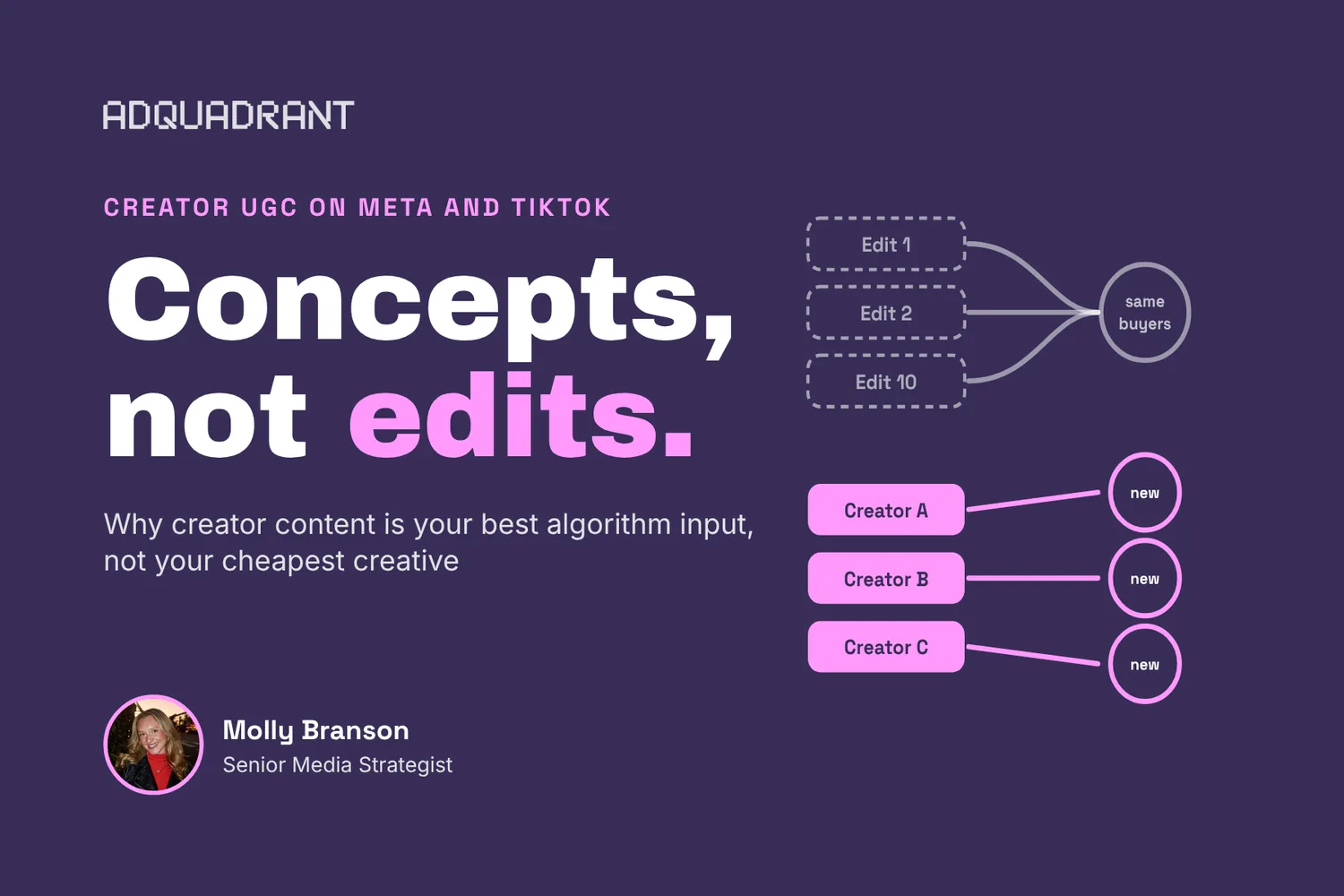
Creator UGC is the strongest input you can give Meta's and TikTok's ad systems, because every creator brings a different face, voice, hook and reason to buy. That variety is what lets the platforms find new pockets of buyers. When brands buy UGC only because it costs less than a studio shoot, they usually end up with twenty versions of the same ad, and the algorithm treats them as one.
I've been in DTC paid social for about six years, and the biggest change I've seen is where targeting lives. It used to be the audience settings. Today, Meta's Advantage+ campaigns and TikTok's Smart+ campaigns do most of the audience work on their own. What they can't do is make your creative for you, so the ads you feed them decide who they can find.
Key takeaway: on Meta and TikTok, creative now does the job targeting used to do. Creator content gives the system distinct concepts to match to distinct buyers, so plan it like a media input, measure it on incremental profit, and stop judging it on production cost.
Why do Meta and TikTok's ad systems reward creator content now?
Since Meta rebuilt its ad retrieval system (Andromeda) in late 2024, the delivery engine uses the creative itself as the targeting signal. A creator talking about planning her own wedding gets served to people who are planning one too. Meta's guidance since then has been consistent. Creative diversification gets better results. TikTok's Smart+ campaigns automate targeting, bidding and creative selection in a similar way, and they accept Spark Ads, so creator posts can run inside them.
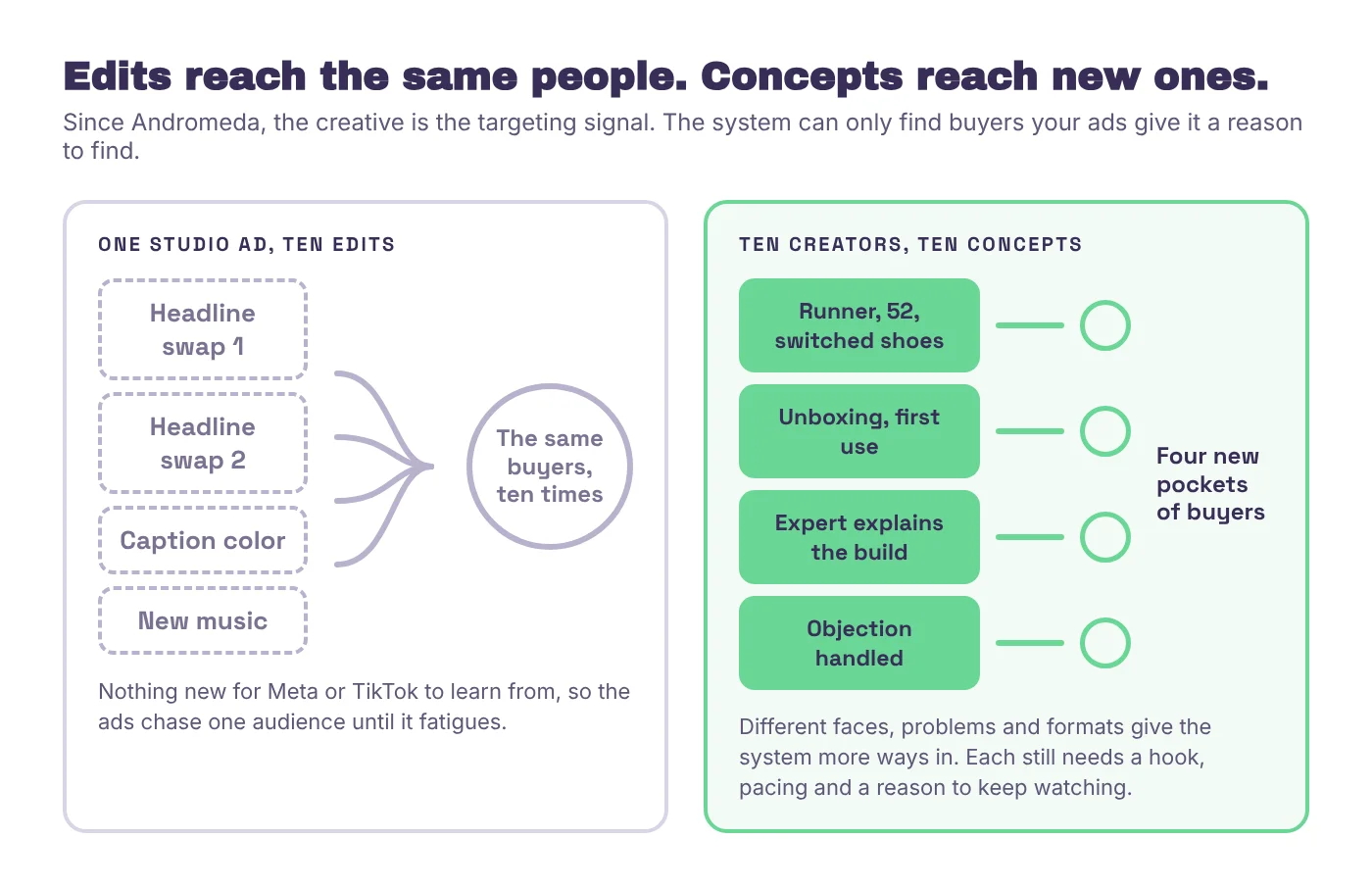
This changed how we test. We used to launch four small variations of one concept and see which headline won. Now the wins come from different creators, different hooks, different video lengths and different formats. A studio ad with ten headline swaps reaches roughly the same people ten times.
Creator content works well here for a few reasons. Different creators bring different ages, styles, problems and ways of talking, which gives the system more ways in. Creator video also looks like the feed, so people watch longer, and that watch time feeds the platform a better engagement signal. And a creator program can turn out new concepts every week, while a studio shoot gives you one batch a quarter.
That said, UGC isn't automatically the winner. On Pier 1, our highest revenue producers are still catalog ads and polished, product-focused statics. I've also seen a deliberately native UGC test for a pet brand lose outright. Creator content still needs performance craft. It needs a hook in the first second, pacing and a reason to keep watching. Approving a creator before you know what they're going to post is how you end up with a lot of videos and not many ads.
What makes a creator ad a "new" ad to the algorithm?
A new ad is a new concept. Changing the caption color, the first frame or the music doesn't give Meta or TikTok anything new to learn from. Changing the person, the angle, the problem or the format does.
A useful way to plan creator briefs is an angle matrix, where each brief sits in one cell:
- Problem and solution. The creator shows the problem first, then the product fixing it.
- Proof. Before and after, a demo, a side-by-side test.
- Founder or expert voice. Someone with authority explains why the product is built the way it is.
- Objection handling. "I thought it would be too expensive" or "I didn't think it would fit."
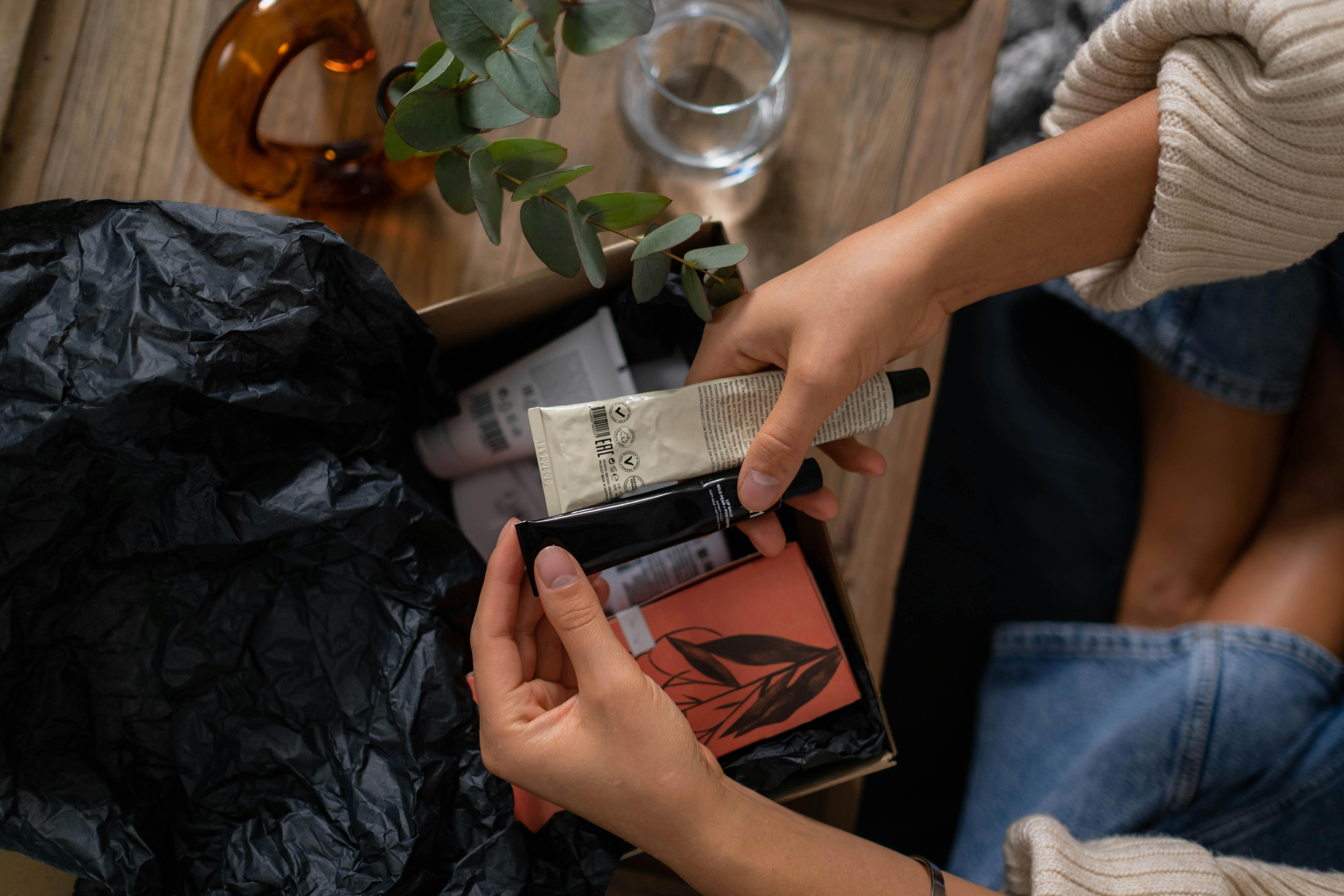
- Unboxing and first use. Honest first reactions.
- Offer or bundle. Clear value for buyers who are already close.
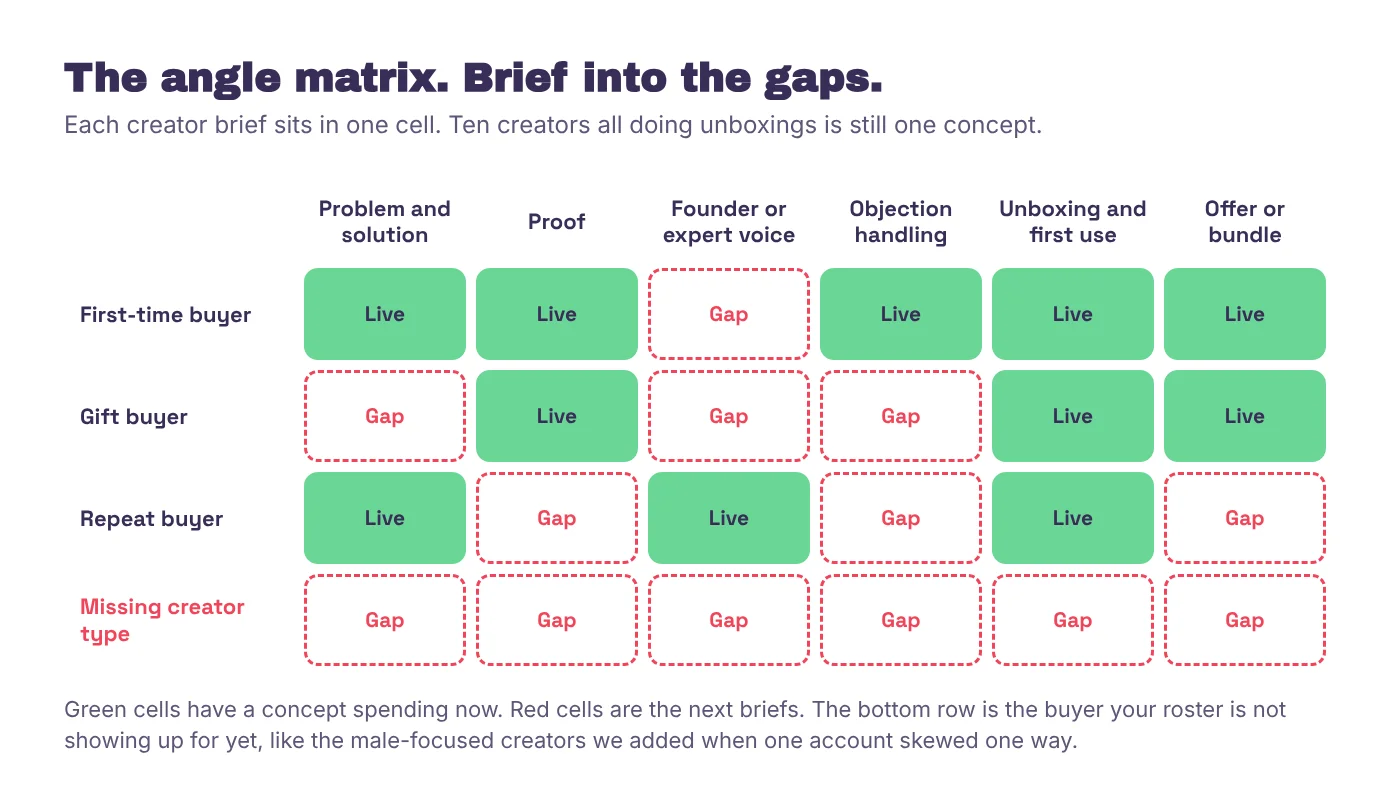
Spread creators across the matrix and across customer types. Ten creators all doing unboxings is still one concept. I also look for the creator types we're missing. On one account, a single creator was carrying a big share of results, so we started looking for more male-focused creators to reach a buyer we weren't showing up for.
How much creator content does a DTC brand need?
Enough to keep new concepts entering the account before the current winners fatigue. There's no universal number, and anyone who quotes one without knowing your spend is guessing. I work backward from spend and fatigue:
- Look at how long your top ads hold their cost per purchase before it climbs. That's your refresh window.
- Count how many distinct concepts are spending meaningful budget at once. If one or two ads take most of the spend, the system has run out of options.
- Plan enough new concepts per refresh window that every customer type and angle in your matrix gets a fresh test.
Fatigue also isn't the same everywhere. I normally tell brands that TikTok is the one that's going to fatigue faster, and most TikTok ads do drop off within 7 to 14 days. But with some influencer videos, especially ones that already have a big organic following, I feel like we see more longevity on TikTok than on Meta. We've had the same video cool off on Meta while it kept running on TikTok. So set refresh windows by platform and by asset, and don't assume one rule fits both.
Higher spend needs more volume, because the system finds and exhausts audiences faster. It also helps to spread results across lots of creators. On one TikTok Shop account, 64 different creators drove sales in a single month. When one creator carries everything, fatigue hits a lot harder.
How should DTC brands run creator content on Meta and TikTok?
Run creator content from the creator's own handle whenever you can. On Meta that means partnership ads, which show both the creator and the brand. On TikTok it means Spark Ads, which run the creator's post with its original likes, comments and profile link, using an authorization code the creator shares. When an ad runs as a partnership, you're opening yourself up to that creator's audience, and in my experience spend starts to scale behind it faster than it does behind a dark post.
Meta's own data points the same way. In a white paper published in October 2026, Meta reported that across 20 conversion lift studies run by EMEA advertisers in the first half of 2025, test cells where partnership ads made up 30% or more of assets showed a 45% lower median cost per incremental purchase. Meta reports 92% confidence for that result, which is below the usual 95% bar, so I'd treat it as a strong signal to test and not a guarantee for your account.
Here's the setup I use:
- Find what's resonating organically first. The algorithm rewards content that has already proven it resonates, so a post that earned engagement on its own gives the system a stronger signal to scale against from day one.
- Test those posts at a low budget with paid behind them, as partnership ads on Meta or Spark Ads on TikTok. If partnership ads look mixed on a conversion objective, a short traffic or view-content test to check CTR before rotating winners into conversion campaigns is a good next step.
- Move proven concepts into your main scaling campaigns. On Meta that's usually an Advantage+ sales campaign. On TikTok it's often Smart+, or GMV Max if you sell through TikTok Shop. One heads-up on Smart+: it can auto-add your brand's organic posts into a campaign you built for creators, so check the creative before you launch.
- Keep brand-made ads in the mix. Product, offer and catalog ads still close buyers that creator content warms up. Meta is also pushing creator content as the intro card in Advantage+ catalog ads, which is worth testing.
- Track usage rights in the same sheet as performance.
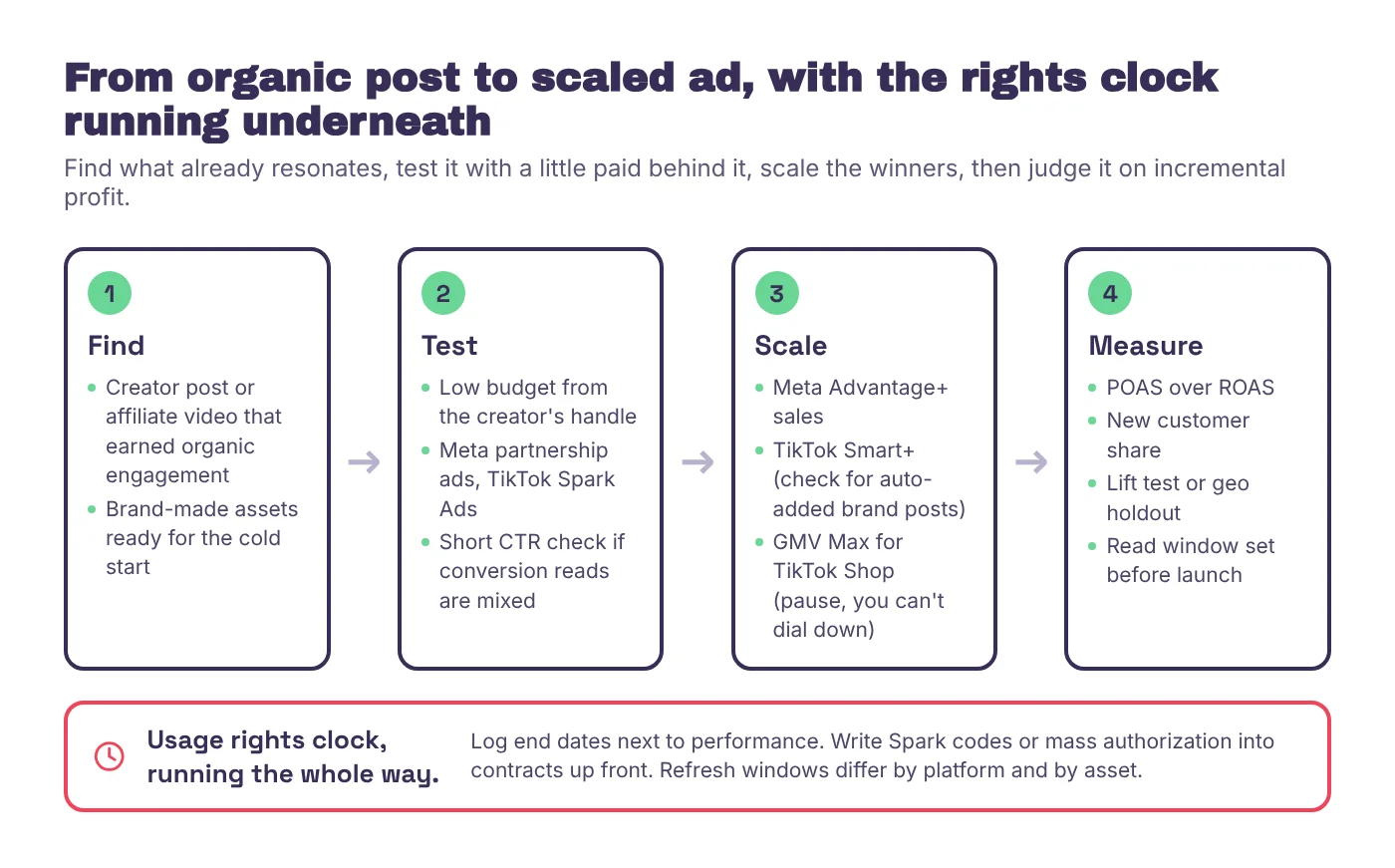
That last one is a performance risk, not paperwork. I've watched an account lose three strong influencer ads at once because their rights expired, and traffic dipped right after. On another, a 30-day TikTok authorization had been logged as 60 days in the tracker. The fix is to write Spark codes or mass authorization into creator contracts up front, so you aren't renegotiating in the middle of a winning run.
If you sell on TikTok Shop, affiliate creators are a second source. Videos they post with product links can be boosted as ads, which is the core of how GMV Max scales. We cover that in our guide to TikTok GMV Max for DTC brands.
GMV Max has one quirk that most guides skip. You can't dial down spend on a top creator video, you can only pause it. On one consumer brand, our top affiliate videos fatigued and GMV fell about 32% week over week. New October content was only getting about $1.6K of $28K month-to-date spend, because the older winners were still soaking up the budget. What we did was pause the older, lower-ROI videos to free up budget and put creative boosts behind the next wave. What that told me is that volume alone doesn't solve it. You have to manage what the system is scaling behind.
Plan for the cold start too. On one TikTok Shop product launch, we didn't have any affiliate content yet, so we couldn't put real spend into GMV Max until brand assets came in. Keeping brand-made content ready means the program isn't stuck waiting on creator authorizations.
How do you know creator UGC is actually driving revenue?
Judge creator content on incremental profit, not on platform ROAS or cost per click. Creator ads often look average in Ads Manager and still grow the business, because they reach people your other ads weren't reaching.
Three checks keep the read honest:
- POAS over ROAS. Profit on ad spend accounts for margin, discounts and shipping. A creator ad that sells your highest-margin bundle can beat a higher-ROAS ad that sells a discounted single unit.
- New customer share. If creator ads mostly reach existing customers, they aren't doing their job.
- Lift tests. Meta conversion lift studies, TikTok lift studies or geo holdouts show what the ads added, not just what they touched. Our incrementality testing playbook walks through how to set one up.
I'll be upfront that most creator results you'll see, including ours below, are platform-reported before-and-after comparisons. They're strong directional signals, but a holdout test is what tells you how much was truly incremental.
Set your read window before launch. Creator programs take a few weeks to show a pattern, and I don't want to call something not working when it's only had a little bit of spend. Judging creator ads after four days usually kills the concepts that would have scaled.
Where does this approach fail?
Creator UGC won't fix a weak product, a slow site or a broken offer. The common failure points I see:
- Sameness. One brief sent to fifty creators produces fifty versions of one ad.
- Cheap creators, cheap results. The lowest-cost creator is rarely the one your buyer trusts.
- Rights gaps. Usage terms that end before the ad stops working.
- No landing page match. A creator ad that promises one thing and lands on a generic product page loses the buyer.
- Reading too fast. Pausing creator ads on early platform ROAS before a fair read window.
- No production craft. Native doesn't mean unplanned. Without a hook, a creator video is just a video.
How Adquadrant approaches this
At Adquadrant, we treat creator content as a media input and plan it next to the budget. For the DTC brands we work with on Meta and TikTok, we brief creators against an angle matrix and a list of customer types, so each new video fills a gap. We find the content that's resonating organically, test it at a low budget as partnership ads on Meta and Spark Ads on TikTok, then scale the winners, and we track usage rights right next to performance. We judge the program on profit and new customers, and we validate with conversion lift and holdout tests where budget allows, with WorkMagic as our measurement partner.
One of the clearest examples is a DTC apparel brand where creator partnership content has become the engine of the account. TikTok is that brand's biggest year-over-year growth story. In late May 2026 we moved all of our partnership ad efforts into a Smart+ campaign dedicated to creator content. From May 26 to October 29, 2026, compared to the same period in 2025, TikTok spend was up 15% while purchases nearly doubled (+99%). Cost per purchase dropped 42%, from $18.30 to $10.64, and ROAS went from 5.7 to 9.1. That one Smart+ creator campaign takes about half of TikTok spend, drives 58% of purchases and runs at an 11.2 ROAS, above the account average. These are TikTok platform-reported numbers.
On Meta, the same brand's ROAS was up 127% year over year in early 2026, with CPAs down 52%. The biggest driver there was pulling spend back after building new audiences in Q4, and scaling into creator and partnership content helped carry that efficiency.
On TikTok Shop, First Saturday Lime is another example. Creator video volume grew from about 110 to 610 videos a week, and monthly GMV went from about $100,000 in March to $1.3 million in May 2026, including a $108,224 day at 7.1x ROI. The lesson wasn't that cheap content scales. It was that enough distinct, proven creator videos gave the ad system room to find new buyers.
How to choose a partner for creator-led paid social
Look for a team that can show you:
- How they decide what creator content to make, tied to performance data and not trends alone
- Partnership ads and Spark Ads running at scale, with usage rights tracked
- A testing structure that separates finding new concepts from scaling proven ones
- Measurement on incremental profit and new customers, not platform ROAS alone
- Creative and media run by the same team, so briefs follow the numbers
What should a DTC brand do next?
- List the concepts spending in your Meta and TikTok accounts today and count how many are truly different.
- Build an angle matrix and map your current ads to it to find the gaps.
- Find your best organic creator posts, test them at a low budget as partnership ads and Spark Ads, then scale the winners.
- Add usage-rights end dates to your creative tracker, and write ad authorization into creator contracts.
- Set up one lift test or holdout before you scale creator spend.
Creator content works when you treat it as fuel for the system and not filler for the calendar. Adquadrant's paid social team can help you build that engine.
About the author
Molly originally hails from Washington State and proudly holds a degree from the University of Washington (Go Huskies!), where she majored in Communications with minors in Diversity, Sales, and Law, Society, and Justice. She launched her career in digital marketing, specializing in Paid Social campaigns for brands across multiple social platforms. After five years in Seattle, Molly traded rain for sunshine and relocated to San Diego in 2023. When she is not immersed in marketing strategy, Molly enjoys spending time with friends and family, attending music festivals, traveling to new places, and doting on her four-legged son Alfie, the cat.